
California Drivers: Another Gas Tax Hike Hits July 1!
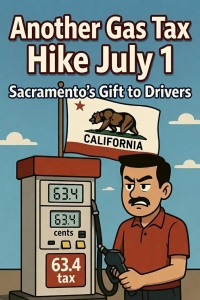
Just in time for summer road trips, Sacramento is raising the state gas tax again. Effective July 1, 2026, California’s gasoline excise tax increases by 2.2 cents per gallon, from 61.2 cents to 63.4 cents per gallon.
The Numbers Don’t Lie
The tax has more than doubled since 2017, when it sat at just 27.8 cents per gallon before Senate Bill 1 (SB 1) took effect.
For the average driver filling up about 40 gallons a month, this latest hike adds roughly $10.56 per year — on top of already sky-high pump prices, refinery outages, and layered fees.
“For the Roads” — But Does It Actually Fix Them?
- Independent analyses (including Reason Foundation’s annual Highway Report) consistently place California’s highway system 47th to 49th out of 50 states in overall condition, cost-effectiveness, and performance.
- Roughly 28% of major roads are rated in poor condition in recent assessments.
- California has the worst urban highway congestion in the country, with drivers in major metro areas losing over 100 hours per year to traffic.
- The gas tax revenue is constitutionally dedicated to transportation purposes (highways, local streets and roads, and some transit infrastructure) under Article XIX of the California Constitution. It cannot simply be swept into the general fund for unrelated spending. However, the state still decides how to allocate and spend it within those broad categories. That gives Sacramento significant flexibility in priorities — maintenance vs. new capacity projects, highways vs. transit expansions, direct road repairs vs. administrative overhead, planning studies, and other transportation programs.
- Despite billions collected annually from gas taxes (plus vehicle fees), California continues to battle:
- Potholes and rough pavement
- Deferred maintenance backlogs
- Skyrocketing construction costs driven by regulations, labor, and environmental rules
- Persistent traffic gridlock that wastes time and fuel
The tax keeps rising to “keep up with inflation,” but drivers aren’t seeing roads that reflect the ever-higher price tag. Many feel the system prioritizes spending the money however Sacramento sees fit rather than delivering measurable, visible improvements where it matters most — smoother commutes and fewer car-damaging potholes.
The Bigger Picture for California Drivers:
- Some of the highest gas prices in the U.S.
- Refinery issues and supply constraints unique to California
- Additional layers like the Low Carbon Fuel Standard and cap-and-trade program costs that also hit at the pump
And with more electric vehicles on the road, gas tax revenue is projected to decline over time — creating long-term pressure for even more changes (or new taxes). Bottom Line California drivers are being asked to pay more every year “for the roads,” yet independent rankings show our infrastructure lagging and congestion worsening. The automatic annual increase ensures the revenue stream grows with inflation, but it doesn’t come with a guarantee of better roads or relief from traffic.